Hair loss is a common concern affecting both men and women. Whether it begins as mild hair thinning, a receding hairline, or noticeable bald patches, hair loss can impact confidence, appearance, and emotional well-being. With advancements in aesthetic and reconstructive medicine, several effective treatment options are now available for hair restoration.
Two of the most commonly discussed treatments are Hair Transplant Surgery and PRP Therapy (Platelet-Rich Plasma Therapy). While both procedures aim to improve hair growth and restore hair density, they work in very different ways and are suitable for different stages of hair loss.
Many patients visiting cosmetic and plastic surgery clinics in Indore often ask the same question: “Should I choose Hair Transplant or PRP Therapy?”
The answer depends on several factors including the cause of hair loss, severity of baldness, age, hair quality, expectations, and long-term goals.
Dr. Arpit Sethiya, a highly skilled Plastic and Reconstructive Surgeon in Indore, provides advanced hair restoration solutions and personalized treatment recommendations based on each patient’s condition. His approach focuses on natural-looking results, patient safety, and long-term satisfaction.
Meet Dr. Arpit Sethiya – Plastic Surgeon in Indore
Dr. Arpit Sethiya is a renowned Plastic Surgeon in Indore known for his expertise in cosmetic, reconstructive, and aesthetic procedures. He completed his MBBS from GMC Bhopal, MS (General Surgery) from GRMC Gwalior, and MCh in Plastic & Reconstructive Surgery from Safdarjung Hospital & VMMC, New Delhi, one of India’s most prestigious centers for plastic and reconstructive surgery.
With years of dedicated surgical experience and advanced training, Dr. Arpit Sethiya has helped numerous patients achieve aesthetic and reconstructive goals through evidence-based treatment approaches.
His areas of expertise include:
- Hair Transplant Surgery
- PRP Therapy
- Cosmetic Surgery
- Rhinoplasty
- Liposuction
- Scar Revision Surgery
- Burn Reconstruction
- Hand Surgery
- Reconstructive Procedures
Patients appreciate his honest guidance, patient-centered approach, and commitment to achieving natural-looking outcomes.
Understanding Hair Loss
Before choosing a treatment, it is important to understand why hair loss occurs.
Hair loss can result from:
- Genetic factors
- Hormonal changes
- Stress
- Nutritional deficiencies
- Medical conditions
- Aging
- Scalp disorders
- Certain medications
The most common cause is Androgenetic Alopecia, also known as male or female pattern baldness.
Early evaluation by an experienced specialist can help identify the underlying cause and determine the most suitable treatment option.
What is PRP Therapy?
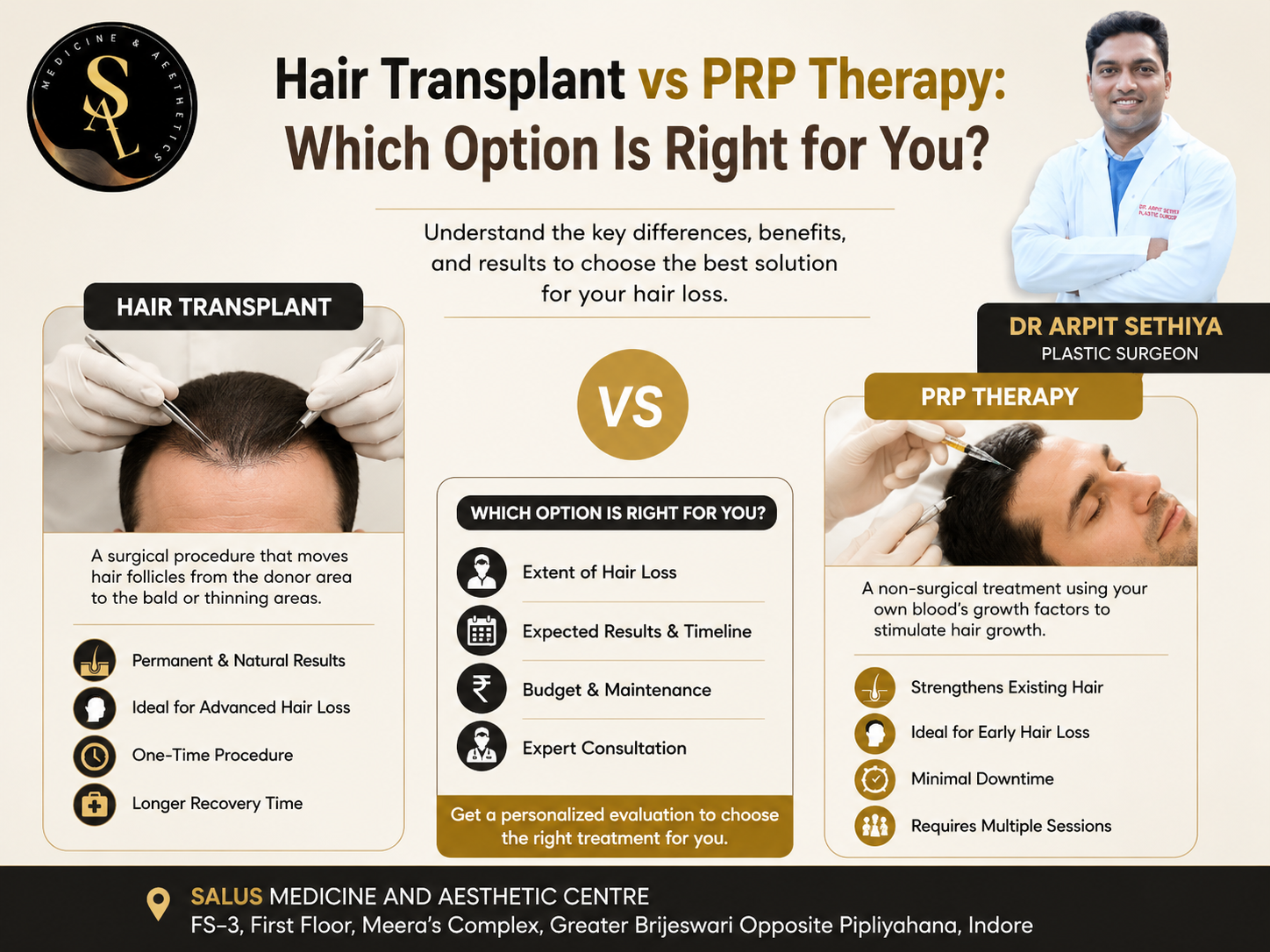
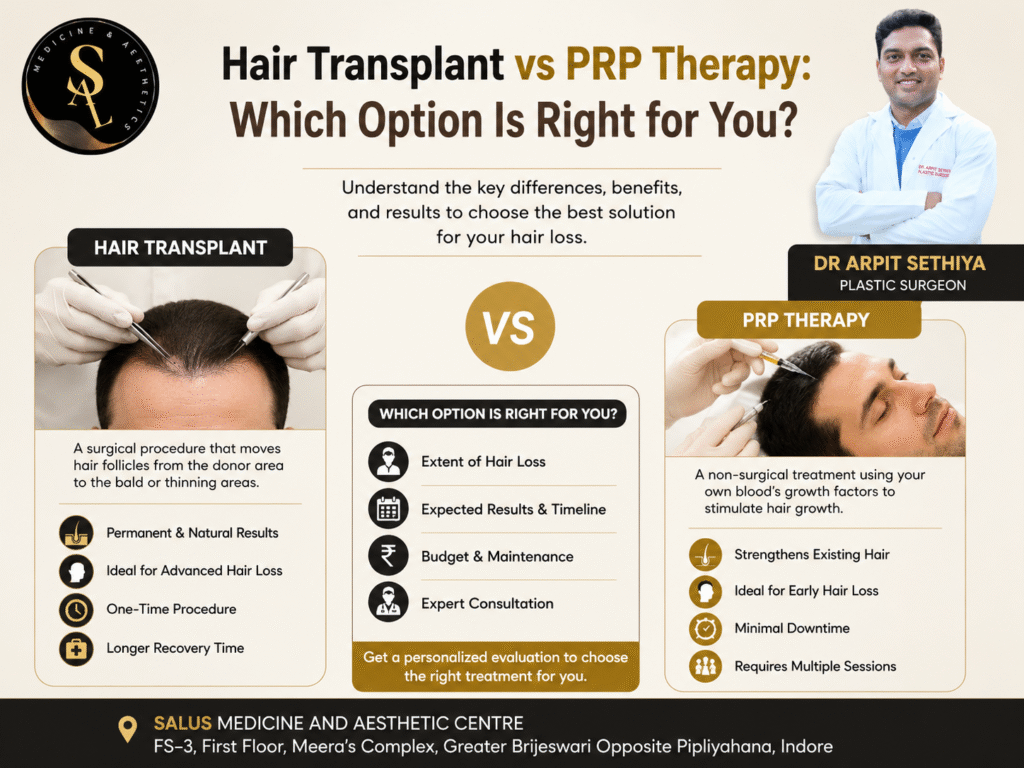
PRP (Platelet-Rich Plasma) Therapy is a non-surgical hair restoration treatment that uses the patient’s own blood to stimulate hair growth.
The procedure involves:
- Drawing a small sample of blood.
- Processing it in a centrifuge.
- Separating platelet-rich plasma.
- Injecting the concentrated plasma into the scalp.
Platelets contain growth factors that may help stimulate dormant hair follicles and improve hair quality.
PRP therapy has become increasingly popular because it is minimally invasive and requires little downtime.
Benefits of PRP Therapy
Many patients choose PRP because it offers several advantages.
Non-Surgical Procedure
No incisions or stitches are required.
Minimal Recovery Time
Most individuals can return to normal activities shortly after treatment.
Uses Natural Components
Since PRP uses the patient’s own blood, the risk of allergic reactions is minimal.
Improves Hair Quality
PRP may help increase hair thickness and reduce ongoing hair fall.
Suitable for Early Hair Loss
Patients with thinning hair often benefit most from PRP therapy.
Who is an Ideal Candidate for PRP Therapy?
PRP therapy may be suitable for individuals who:
- Have early-stage hair loss
- Experience hair thinning
- Have weak hair follicles
- Want a non-surgical treatment option
- Wish to improve hair density
However, PRP cannot create new hair follicles where complete baldness already exists.
Limitations of PRP Therapy
Although PRP therapy can be effective, it has certain limitations.
PRP may not provide significant results for:
- Advanced baldness
- Large bald patches
- Completely inactive follicles
- Extensive hair loss
In such cases, hair transplant surgery may be a more appropriate solution.
What is Hair Transplant Surgery?
Hair transplant surgery is a cosmetic procedure that involves moving healthy hair follicles from a donor area to areas affected by hair loss.
The donor area is usually located at the back or sides of the scalp where hair growth remains strong and genetically resistant to balding.
The transplanted follicles continue to grow naturally after implantation.
Hair transplant surgery is considered one of the most effective long-term solutions for permanent hair restoration.
How Hair Transplant Surgery Works
The procedure generally involves:
Donor Hair Extraction
Healthy follicles are carefully harvested from the donor area.
Graft Preparation
The extracted follicles are prepared for implantation.
Recipient Site Creation
Tiny openings are created in the balding area.
Implantation
Hair follicles are strategically implanted to create a natural hairline and density.
Over the following months, transplanted hair begins to grow naturally.
Benefits of Hair Transplant Surgery
Hair transplant surgery offers several significant advantages.
Permanent Results
Transplanted hair typically continues growing for life.
Natural Appearance
Modern techniques provide highly natural-looking outcomes.
Improved Hair Density
Hair transplant can effectively restore density in balding areas.
Long-Term Solution
Unlike temporary treatments, transplantation provides lasting improvement.
Increased Confidence
Many patients report improved self-esteem after hair restoration.
Who is a Good Candidate for Hair Transplant?
Hair transplant surgery may be suitable for individuals who:
- Have moderate to severe hair loss
- Have sufficient donor hair
- Have stable hair loss patterns
- Desire long-term results
- Have realistic expectations
A detailed consultation is essential before deciding on surgery.
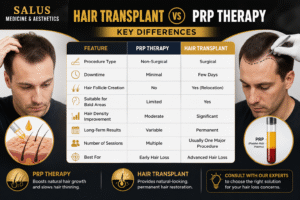
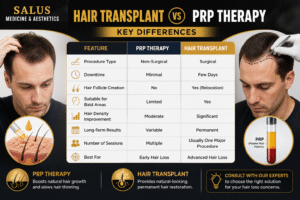
Hair Transplant vs PRP Therapy: Key Differences
| Feature | PRP Therapy | Hair Transplant |
|---|---|---|
| Procedure Type | Non-Surgical | Surgical |
| Downtime | Minimal | Few Days |
| Hair Follicle Creation | No | Yes (Relocation) |
| Suitable for Bald Areas | Limited | Yes |
| Hair Density Improvement | Moderate | Significant |
| Long-Term Results | Variable | Permanent |
| Number of Sessions | Multiple | Usually One Major Procedure |
| Best For | Early Hair Loss | Advanced Hair Loss |
Both treatments have their place in hair restoration, but they serve different purposes.
Can PRP and Hair Transplant Be Combined?
Yes.
In many cases, specialists recommend combining PRP therapy with hair transplant surgery.
Benefits of combination treatment may include:
- Improved healing
- Better graft survival
- Enhanced hair growth
- Improved hair quality
This combined approach often helps optimize overall outcomes.
Factors to Consider Before Choosing a Treatment
Several factors influence treatment selection.
Severity of Hair Loss
Early thinning may respond well to PRP.
Advanced baldness may require transplantation.
Age
Younger patients with active hair loss may initially benefit from PRP.
Hair Quality
Donor hair quality plays a critical role in transplantation success.
Expectations
Patients seeking dramatic density improvement often prefer hair transplant surgery.
Budget
Treatment costs and long-term goals should be considered during decision-making.
Why Professional Evaluation is Important
Every patient’s hair loss pattern is unique.
Choosing a treatment without proper assessment may lead to unsatisfactory outcomes.
An experienced specialist evaluates:
- Hair loss pattern
- Donor area quality
- Scalp health
- Medical history
- Treatment expectations
This helps determine the most suitable and effective treatment plan.
Why Patients Choose Dr. Arpit Sethiya for Hair Restoration in Indore
Patients trust Dr. Arpit Sethiya because of his extensive training, surgical expertise, and patient-focused approach.
Reasons patients choose him include:
- Advanced plastic surgery training
- Expertise in hair restoration procedures
- Personalized treatment recommendations
- Natural-looking aesthetic results
- Comprehensive patient evaluation
- Focus on safety and long-term outcomes
His goal is to provide honest guidance and treatment solutions that align with each patient’s needs.
Summary
Hair loss can affect appearance, confidence, and quality of life, but modern treatment options provide effective solutions. PRP therapy is often beneficial for individuals experiencing early-stage hair thinning, while hair transplant surgery offers a long-term solution for moderate to advanced hair loss.
Understanding the differences between these treatments is essential for making an informed decision. The most suitable option depends on the severity of hair loss, scalp condition, expectations, and individual goals.
FAQs – Hair Transplant vs PRP Therapy
Which is better, PRP or Hair Transplant?
Both treatments serve different purposes. PRP is often suitable for early hair loss, while hair transplant is typically preferred for advanced baldness.
Is PRP therapy painful?
Most patients experience only mild discomfort during treatment.
How long does a hair transplant last?
Transplanted hair follicles are generally permanent and continue growing naturally.
Can PRP regrow hair in bald areas?
PRP may improve thinning hair but is usually less effective in completely bald areas.
Can PRP be done after a hair transplant?
Yes. PRP is often used after hair transplant surgery to support healing and improve growth.
Conclusion – Hair Transplant vs PRP Therapy: Which Option Is Right for You?
Choosing between Hair Transplant Surgery and PRP Therapy depends on your hair loss pattern, expectations, and overall goals. While PRP therapy can help strengthen existing hair and slow hair loss, hair transplant surgery remains one of the most effective options for restoring hair in areas affected by significant baldness.
Dr. Arpit Sethiya, Plastic Surgeon in Indore, provides comprehensive hair restoration consultations and personalized treatment plans to help patients make informed decisions. Through detailed assessment, advanced techniques, and a patient-centered approach, he helps individuals achieve natural-looking and long-lasting hair restoration results.